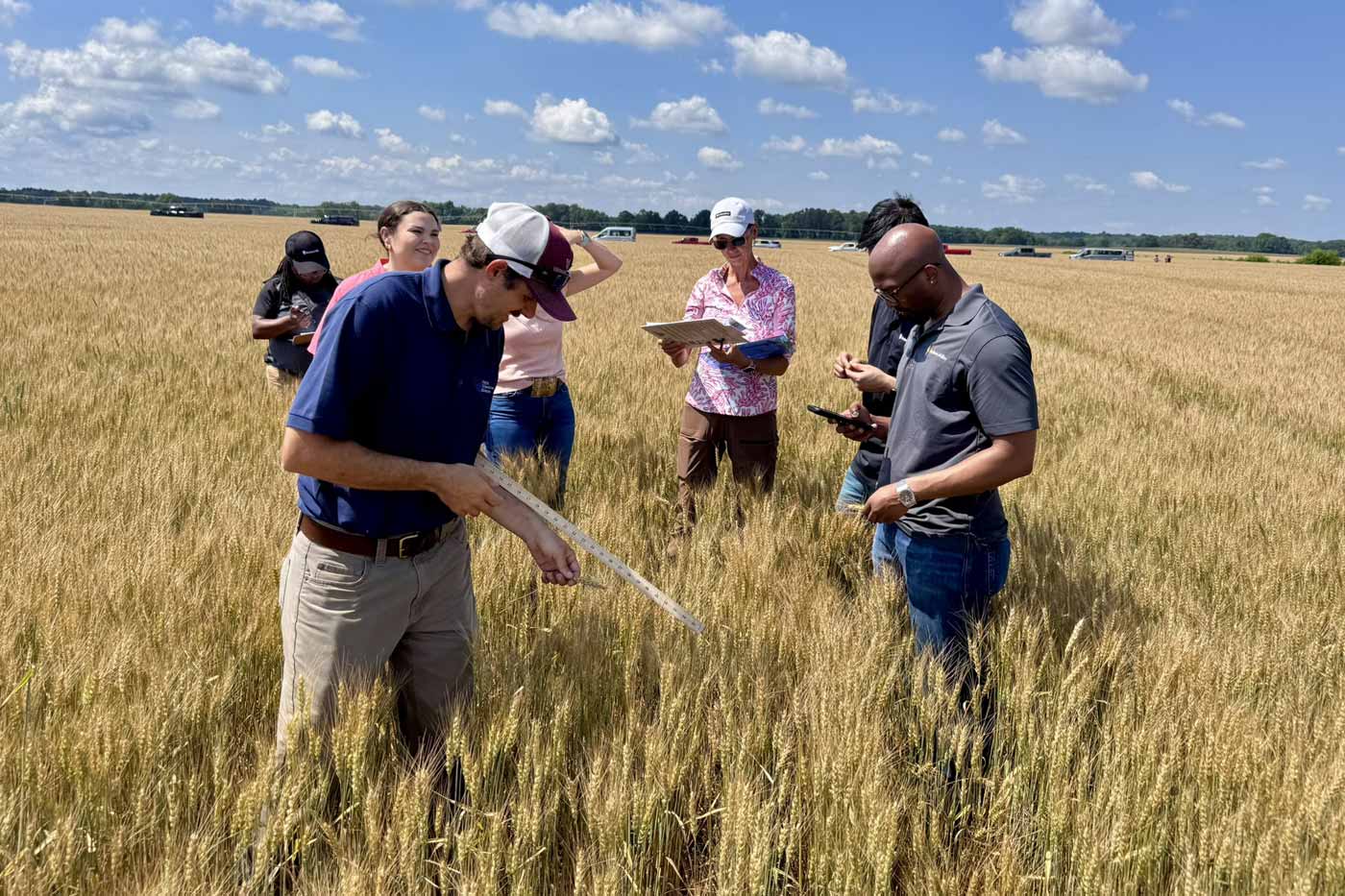
TAPPAHANNOCK—Prolonged spring drought and a late-season frost left a clear mark on Virginia’s small grain crops, as participants in a May 28 wheat tour visited 10 farms and assessed growing conditions.
Virginia Farm Bureau Federation grain manager Robert Harper noted that this year’s tour showed that the five wheat farms in the Northern Neck averaged 69 bushels per acre. Averages for the five Middle Peninsula farms totaled 47 bushels per acre.
This is the 11th year that Virginia fields were included in the multi-state Mid-Atlantic wheat tour, which also surveys farms in Delaware, Maryland, New Jersey and Pennsylvania.
Organized by VFBF and Virginia Cooperative Extension, in partnership with the Eastern Virginia Agricultural Research and Extension Center, this year’s tour participants visited 10 farms between the Northern Neck and Middle Peninsula. Buyers, millers, researchers and other industry stakeholders built on their knowledge of wheat production by estimating yield potential, inspecting grain quality and scouting for disease pressure.
Virginia farmers expect to harvest a total of 3.1 million bushels of winter wheat this year, according to the U.S. Department of Agriculture National Agricultural Statistics Service. The 2025 harvest in Virginia came in at 4.6 million bushels due to more acres and higher yield.
Repeated hours of subfreezing temperatures caused significant damage to wheat crops during a vulnerable growth stage, noted Robbie Longest, a Virginia Cooperative Extension agriculture and natural resources agent in Essex County.
“At about 28 to 29 degrees for several consecutive hours, you can have very severe yield losses due to floret sterility,” Longest explained. “We had that a lot in this area.”
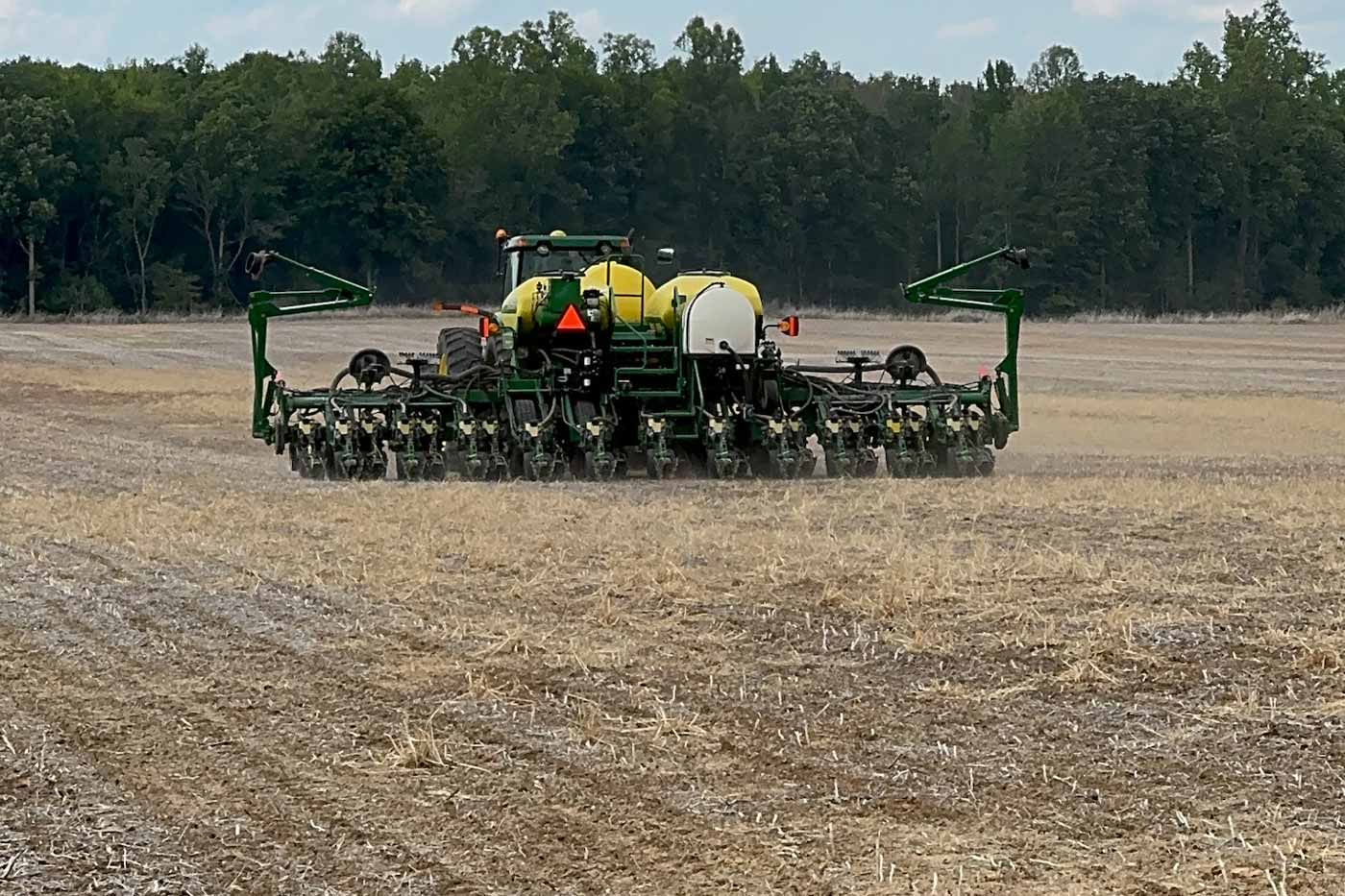
Longest said some fields are so severely damaged they may not be harvested. As a result, some growers are pivoting to alternative uses for damaged crops. They are exploring markets for baled wheat straw that is sold for fall decorations or used in construction applications, helping offset losses from reduced grain yields.
“You’re going to see harvested acreage depressed even further,” Longest said, pointing to fields where entire sections may instead be replanted into other crops. Similar conditions were last seen in 2020, though Longest said such events historically occur only once every few decades.
The timing of warm February weather followed by a late freeze proved especially destructive, accelerating crop development before exposing it to damaging cold.
“Timing is everything with wheat, and this year proved how little margin for error farmers have,” said Harper. “You can do everything right—plant on time, manage for a strong stand—but in the end, weather is one factor you can’t control. A late frost like this can undo a lot of hard work in just a few hours.”
Wheat growers plan to harvest 60,000 acres for grain across all 95 counties in Virginia this June and July.
Media: Contact Harper at 804-290-1105.