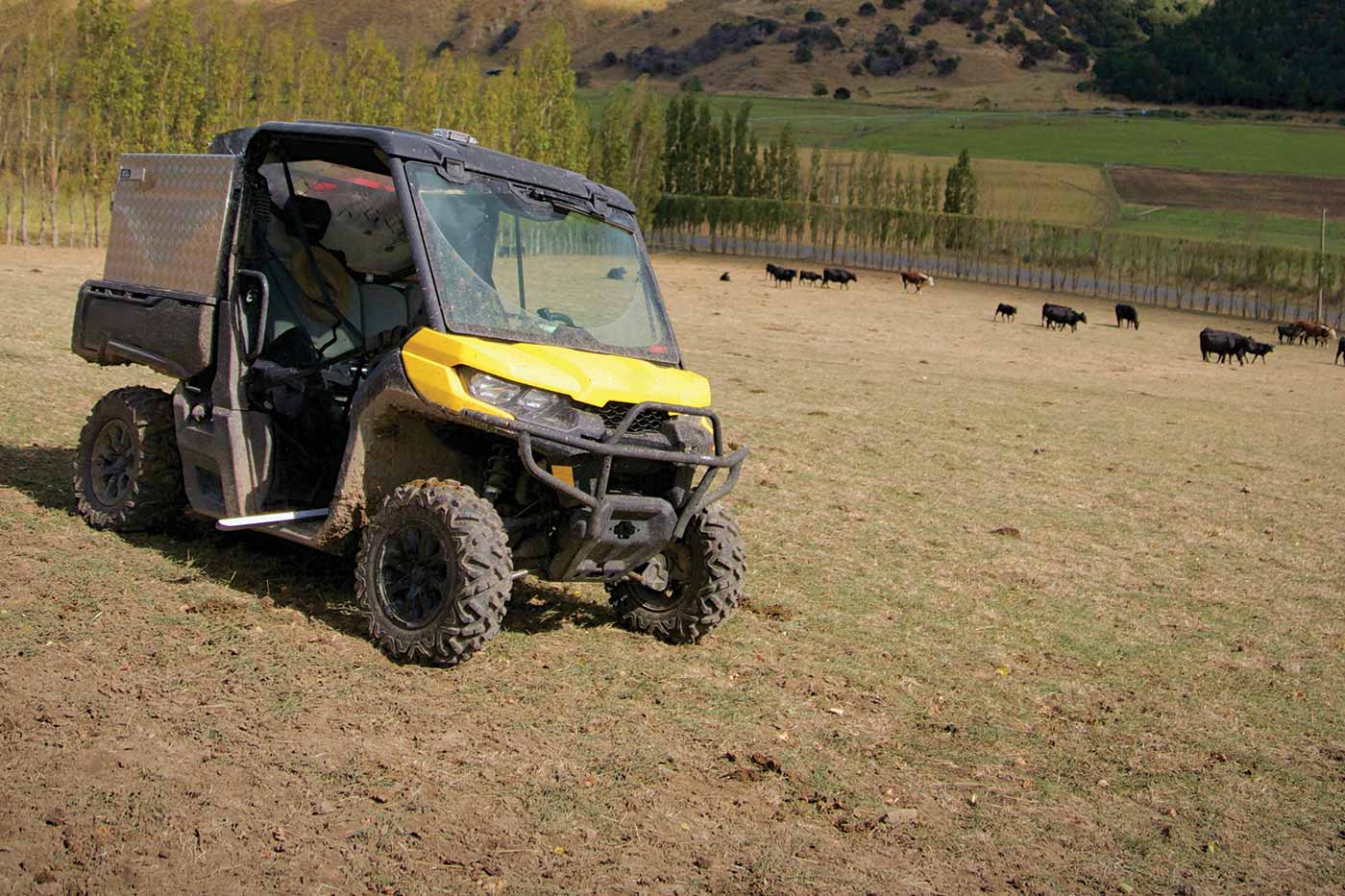
BLACKSBURG—As Virginians traverse the great outdoors on utility terrain vehicles this spring and summer, they’re reminded that even remarkably rugged and versatile machines have life-threatening limits.
Whether for trail riding, hunting, hauling or camping, UTVs can unlock myriad outdoor adventures with ease—all while offering the operational familiarity and enhanced protection of an automobile. But comfort can be a catalyst for carelessness.
“UTVs can be dangerous machines,” cautioned Curt Porterfield, assistant director of facilities and safety for the Virginia Tech College of Agriculture and Life Sciences. “Many folks don’t respect the machine enough to know its dangerous capabilities.”
Off-highway vehicle-related deaths in the U.S. increased by 32% from 2018 to 2020, with 37 reported deaths from OHV-related incidents in Virginia. Nationally, around 100,900 emergency department-treated injuries associated with OHVs occurred annually from 2018-2022, according to a 2024 U.S. Consumer Product Safety Commission report.
Hazards related to speed, slope, “too much weight in the wrong place at the wrong time,” and machine conditions are the top causes of UTV-related crashes and injuries, according to Porterfield.
The affordability and availability of used UTVs is helping drive increased incidents.
“These private sale machines are often repaired to operate mechanically but may not be brought up to the necessary safety standards,” he noted. “Not addressing essential safety repairs in a used machine and accepting the risk is a common mistake.”
Other common mistakes include operating a UTV while under the age of 16, or while under the influence of drugs or alcohol.
Before purchasing a UTV, consider the machine’s limitations and projected use, riders and terrain.
Most models are equipped with rollover protective structures. Unless by design, avoid removing the ROPS and other safety features.
“Read the operator’s manual in its entirety, establish a relationship with your dealer and ask questions about your machine,” Porterfield encouraged.
Before your ride:
- Perform an equipment inspection. Frequent cleaning and maintenance are essential to identifying faulty features.
- Check the Consumer Product Safety Commission website to verify if any recalls have been addressed.
- Consult the operator’s manual for cargo weight limitations.
- Ensure all riders are wearing proper clothing and personal protective equipment.
- Consider keeping first aid and enhanced trauma kits, warning flares or signs, extra communication devices, and load and recovery straps on hand.
- Check state or county requirements for land and road use.
While operating a UTV:
- Buckle up, and only carry the number of passengers you have seatbelts for. Limit the frequency of young children as passengers whenever possible, and avoid carrying infants.
- Evaluate riding areas at slow speeds to help determine which areas to avoid.
- Have access to pre-established roads and trails, and avoid driving on paved roads.
- If riding alone, check in with someone frequently.
- Consider soil conditions, cargo weight, the number of passengers and speed to help determine slope hazards. In general, target slopes under 15 degrees.
- If operating a UTV without a ROPS, avoid wearing seatbelts to allow for a quick escape in the event of an impending rollover.
- Limit towing and the use of hitch attachments, and know the weight limitations of any attachment.
Porterfield encourages all UTV owners to get appropriate training, and leverage Recreational Off-Highway Vehicle Association resources at rohva.org/learn-to-drive.
Read more in Virginia Farm Bureau’s Cultivate magazine.
Media: Contact Porterfield at 540-231-8759.