CHARLOTTESVILLE—When a tree reaches the end of its life, it can be reborn with a restored purpose in the community—enriching local spaces, economies and the environment for generations to come.
That’s the goal of the Virginia Urban Wood Program. Coordinated by the Virginia Department of Forestry with guidance from the Virginia Urban Wood Group, the program promotes “full circle management” of Virginia’s urban forest resources.
The program was launched in 2017 in an effort to recover more trees from the “built environment.” Urban wood refers to trees extracted from non-commercial forests—like a resident’s 2-acre lot, an interstate median, or a single walnut tree from “your Aunt Mary’s backyard,” explained Joe Lehnen, Virginia DOF forest utilization and marketing specialist.
“We wanted to make sure that we’re honoring the tree’s existence,” he noted. “Instead of having everything tub ground and chunked into firewood, our goal was to give the tree purpose, try to use it to its best use, and give people opportunities to use that resource to grow a business and create local economies.”
Whether transformed into a dining table, cabinet or art piece, the possibilities are endless when it comes to repurposing urban wood into carbon-storing, solid products.
“If somebody has two trees in their backyard that have to come down, they may not necessarily want to part with those trees that have been part of their landscape for decades,” Lehnen remarked. “The beauty of urban wood is that you can make something out of any species, and there’s people out there willing to make it for you.”
The Virginia Urban Wood Program connects a vast network of local wood businesses with residents, natural resource professionals and entrepreneurs hoping to repurpose their wood resources.
“We try to keep it as local as possible, which creates a better, more vibrant economy,” Lehnen noted.
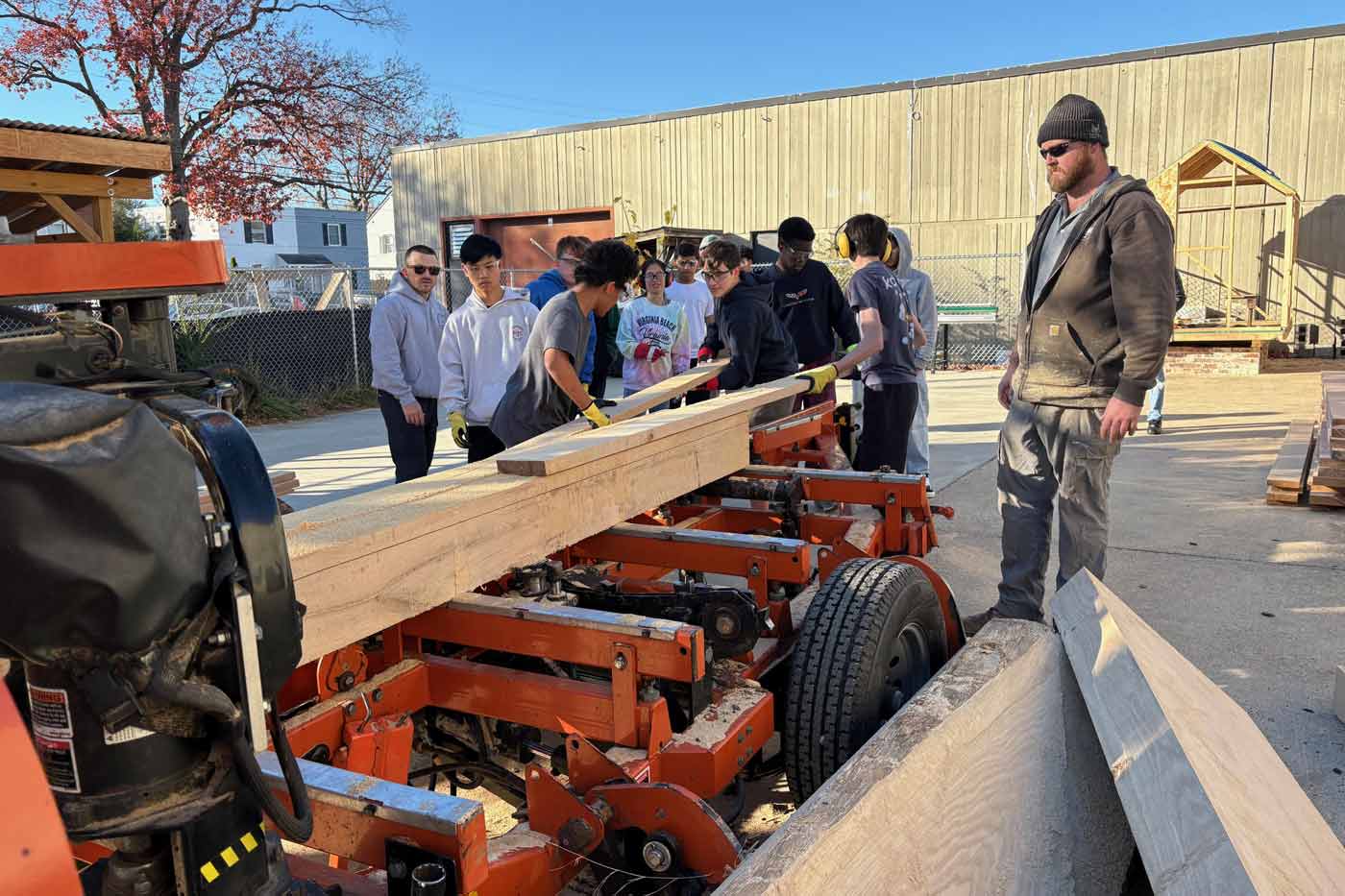
The program offers guidance and fosters connections throughout the recycling process—like finding a specialized tree care company that can safely chop the tree in an urban or suburban environment, a maker with a portable sawmill who can produce the desired wood product onsite, or an artisan in need of materials.
Virginia’s urban wood program has even helped leverage local wood resources for university furnishings, student art and hands-on learning opportunities through its nationally recognized Cooperating Universities Urban Wood Program. The program offers instructional sessions on topics like sawmilling skills, basic lumber grading and measurement, and the community benefits of urban tree recycling.
Lehnen looks forward to growing program participation and partnering with more universities.
“We’re creating a sense of community,” he reflected. “We’re taking trees that we previously did not use to their best use, and we’re making products out of them that are meaningful to a lot of people.”
Visit vaurbanwood.org for more information on Virginia’s urban wood program.
Residents can search for nearby businesses that offer urban tree or small woodlot services through the Virginia Urban Wood Directory. The directory is free of charge, and businesses are encouraged to list themselves to connect with potential customers.
Media: Contact Lehnen at 434-977-6555.