ZUNI—Virginia farmers battered by low commodity prices and market uncertainty in 2025 are receiving a historic round of federal farm safety-net assistance.
The U.S. Department of Agriculture’s Farm Service Agency is distributing about $65 million in safety-net and conservation payments to Virginia farmers and landowners. Nationally, USDA announced $13.8 billion in gross Agriculture Risk Coverage and Price Loss Coverage payments for the 2025 crop year, along with $1.8 billion in 2026 Conservation Reserve Program payments.
ARC provides support when crop revenue falls below a guaranteed level, while PLC pays when a commodity’s effective price falls below its effective reference price. For the 2025 crop year only, producers automatically receive the higher payment rate from either ARC or PLC, regardless of which program they elected. The payment limit also increased to $160,000 for 2025.
“These dollars help producers and landowners in our state cover operating expenses, purchase supplies and equipment, and do business with local companies, creating a positive economic ripple effect throughout our rural communities,” said Wilmer Stoneman, FSA state executive director in Virginia. “It’s a tremendous investment in Virginia agriculture and, collectively, in American agriculture.”
The assistance comes after Virginia producers endured depressed prices and yield losses during the 2025 crop year. Barley, canola, corn, grain sorghum, mustard, oats, peanuts, peas, rapeseed, seed cotton, sesame, soybeans, sunflowers and wheat grown in Virginia triggered PLC payments.
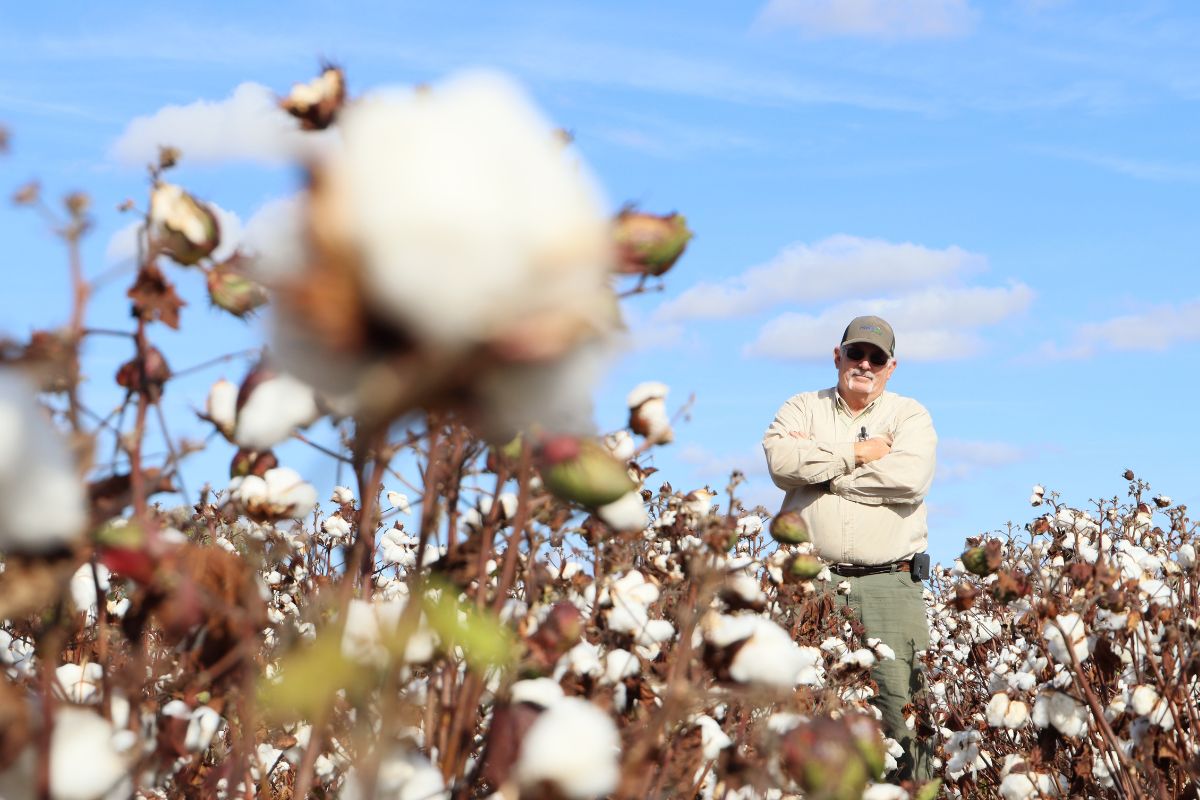
Southampton County farmer Gary Cross grows corn, cotton, peanuts, soybeans and wheat on his family’s 1,100-acre farm. By 2025, he said, depressed commodity prices had already squeezed his operation for about 18 months.
“Cotton is an economy crop and prices are low,” he explained. “Plus, household budgets are tight, and people can’t go splurge on new clothing right now.”
Representing regional farmers on the Virginia Farm Bureau Federation state board of directors, Cross understands the gap between suffering a loss and receiving assistance can put a farm’s future in question.
“I’ve had to talk banks into letting me continue to farm, hoping payments would come from the government a year later,” he said. But despite those timing challenges, “support from FSA is very welcome and very needed.”
Cross attributed market slumps to growing global competition, abundant foreign harvests, bewildering crop reports and trade disruptions like tariffs that limit export opportunities.
“We’re living with price fluctuations all the time,” Cross said. “And if we can’t trade our commodities with other countries, we end up with a surplus.”
Payments remain subject to payment-limit reductions and a 5.7% sequestration rate. ARC-County payments are calculated at the county level and will be issued as FSA completes its calculations.
Farmers with questions about eligibility or payments should contact their local FSA county office. Visit www.fsa.usda.gov/state-offices to find office locations or call 804-287-1500.
Media: Contact Stoneman at 804-287-1503 or Cross at 757-630-8370.