FLOYD—Virginia livestock producers can again apply for permits to shoot black vultures that threaten newborn animals, but farmers say the renewed program barely scratches the surface of a growing problem.
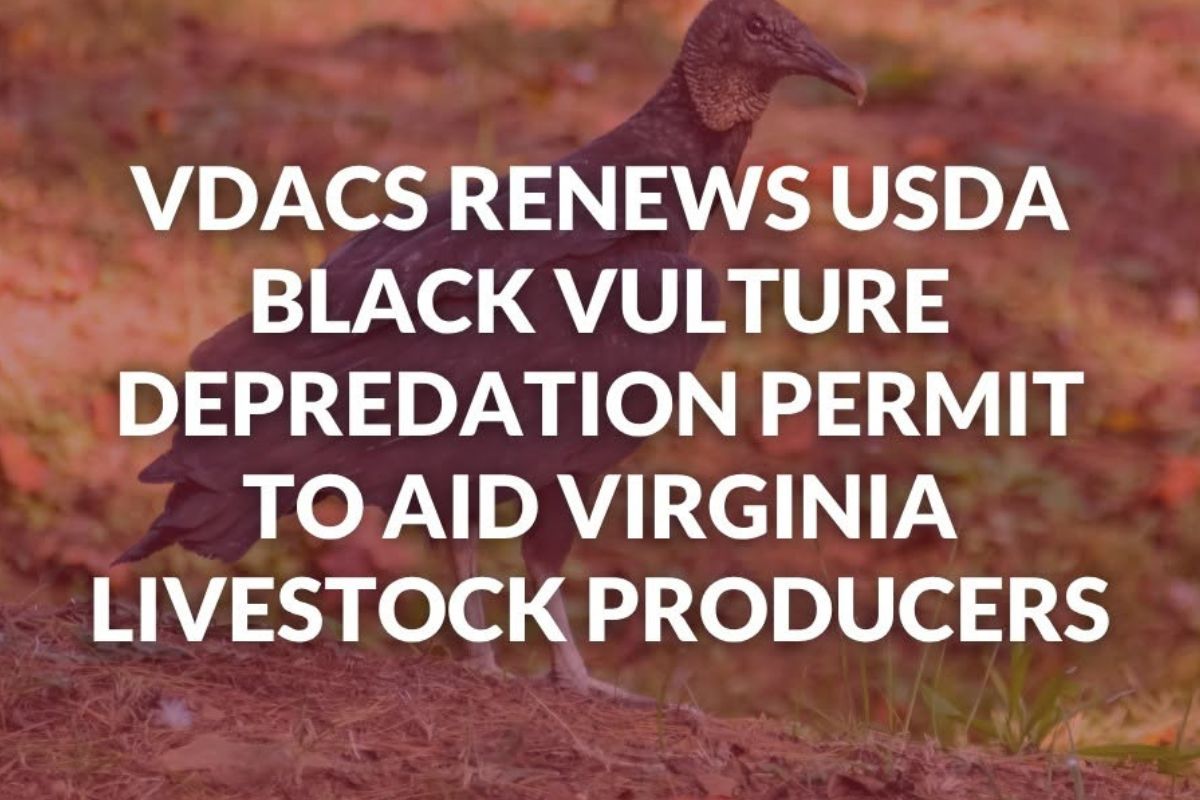
The Virginia Department of Agriculture and Consumer Services has renewed its black vulture depredation permit through the U.S. Fish and Wildlife Service. Working with the U.S. Department of Agriculture’s Animal and Plant Health Inspection Service Wildlife Services, VDACS issues free sub-permits that allow producers to take up to five black vultures per year.
Crucial to the ecosystem, black vultures are federally protected native species under the Migratory Bird Treaty Act of 1918. Their population has increased by 468% nationally since 1990, according to the U.S. Geological Survey’s Breeding Bird Survey. However, the growing population does not automatically remove legal protections just because local numbers have bounced back or increased in a specific area.
Vulture attacks on newborn livestock pose a serious threat to Virginia farms, especially as national cattle inventory is low.
Justin Coleman, a Floyd County-based field services director at Virginia Farm Bureau Federation, knows the heartbreak firsthand. During fall calving season, he got a call at church one Sunday about vultures swarming a newborn calf on his pastureland. By the time he arrived, six to eight birds surrounded the calf, born just a couple of hours earlier.
It didn’t survive.
“Vultures have gotten pretty brazen,” Coleman said. “They weren’t even alarmed until I got really close.”
Later that day, a neighbor called about vultures crowding another field 5 miles away. That time, Coleman arrived in time to shoo the birds, and the calf was fine.
Coleman contacted the Farm Service Agency about assistance, but his loss didn’t qualify because it fell within “normal mortality rates.” Already having to ship in hay because of drought, he said the classification misses the mark.
“No producer of any commodity considers loss by a federally protected animal ‘normal,’” he explained. “It is not normal.”
To qualify for a sub-permit, farmers must first try nonlethal measures, such as dispersing vultures with light or sound, and reduce attractants by properly disposing of garbage and dead livestock. Producers who need to take more than five birds must get an individual permit directly from FWS.
Farm groups are pushing for a broader fix. The Black Vulture Relief Act, which advanced out of the U.S. House Natural Resources Committee in July 2025, would let producers take vultures that threaten livestock without individual federal permits, filing an annual report instead.
“The current take permit numbers are just not enough to properly manage the population while also protecting newborn calves that make easy targets for these predators,” said Virginia cattleman Gene Copenhaver, National Cattlemen’s Beef Association president. “As cattle producers, we cannot afford to risk newborn calves to predators, like black vultures, if we are going to begin rebuilding the herd.”
To apply for a sub-permit, contact Chad Fox with USDA-APHIS Wildlife Services at 540-381-7387 or chad.j.fox@usda.gov.
Media: Contact Coleman at 540-824-5263, or Jake Tabor, VFBF Governmental Relations, at 540-616-5159.