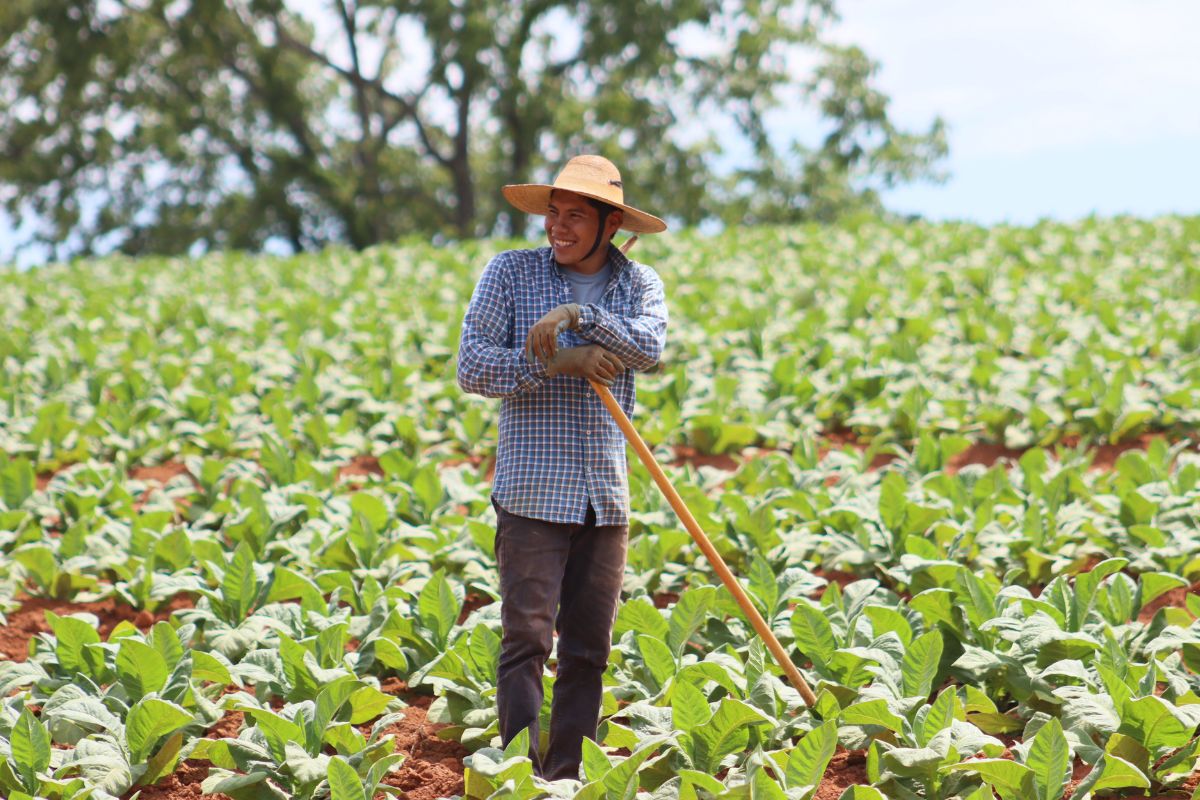
CALLANDS—Omar Avalos has returned to Robert Mills’ Pittsylvania County tobacco farm for 14 years—long enough to watch the farmer’s children grow up.
“You arrive as a worker, but after enough seasons you become part of each other’s lives,” Avalos said. “I knew Robert’s children when they were little. Now they’re grown. It feels almost like family.”
Avalos is one of many foreign workers who come to Virginia farms legally through the federal H-2A temporary agricultural worker program. Farmers say those workers are essential to a stable domestic food supply.
“If foreign workers didn’t produce our food, Americans would rely on food produced in foreign places,” said Mills, vice president of Virginia Farm Bureau Federation. Workers on his farm affectionately call him El Patrón—Spanish for “boss.”
This year, H-2A processing bottlenecks delayed workers’ arrival for 72 Virginia farmers—a reminder that one missed planting or harvest window can mean less food from local farms.
Dana Boyle of Garner’s Produce in Westmoreland County has used the program for 25 years and employs six H-2A workers alongside domestic employees.
“There’s a lot of misconception around ‘taking American jobs,’” she said. “No matter the dollar amount or hours offered, it’s been years since I have had a domestic applicant for those positions.”
Farmers must advertise H-2A jobs domestically first. Last year, only 182 domestic applications were submitted for 415,000 advertised temporary farm positions nationwide—just 0.04%—according to American Farm Bureau Federation.
“We need a steady, consistent, dependable workforce,” Boyle said. “Because the vegetables won’t stay on hold!”
“Cheap labor” is another myth. Employers must pay federal wage rates currently averaging $15.96 an hour and cover many costs for housing, transportation, recruitment and travel. Mills spends more than $1,600 per worker in travel costs alone.
Workers are screened by federal officials, and fewer than 2% of visa holders overstay, according to AFBF; and the U.S. Department of Labor inspects housing and working conditions.
For workers, the jobs can change lives back home.
“At home, they pay very little for this kind of work,” said Omar Basilio, who has returned to Boyle’s farm for 13 seasons. “But coming here helps support my family. We’ve been able to build a house and live a little better.”
Boyle has traveled to Mexico for workers’ weddings, baptisms and funerals.
“We’re not blood kin,” she said. “But on the farm, we’re all family here. They depend on us as much as we depend on them.”
Mills advocates for federal reforms, such as the proposed Securing Agriculture’s Workforce Act, to modernize the H-2A system.
“This can ensure long-term viability for my farm,” he said. “And long-term employment for my 11 workers.”
Avalos plans to return in 2027 for his 15th season.
“If God permits,” he said. “And if the boss still needs me!”
See the full story in fall Cultivate magazine at issuu.com/virginiafarmbureau.
Media: Contact Oliva Gyapong, VFBF Governmental Relations, at 240-483-1932.