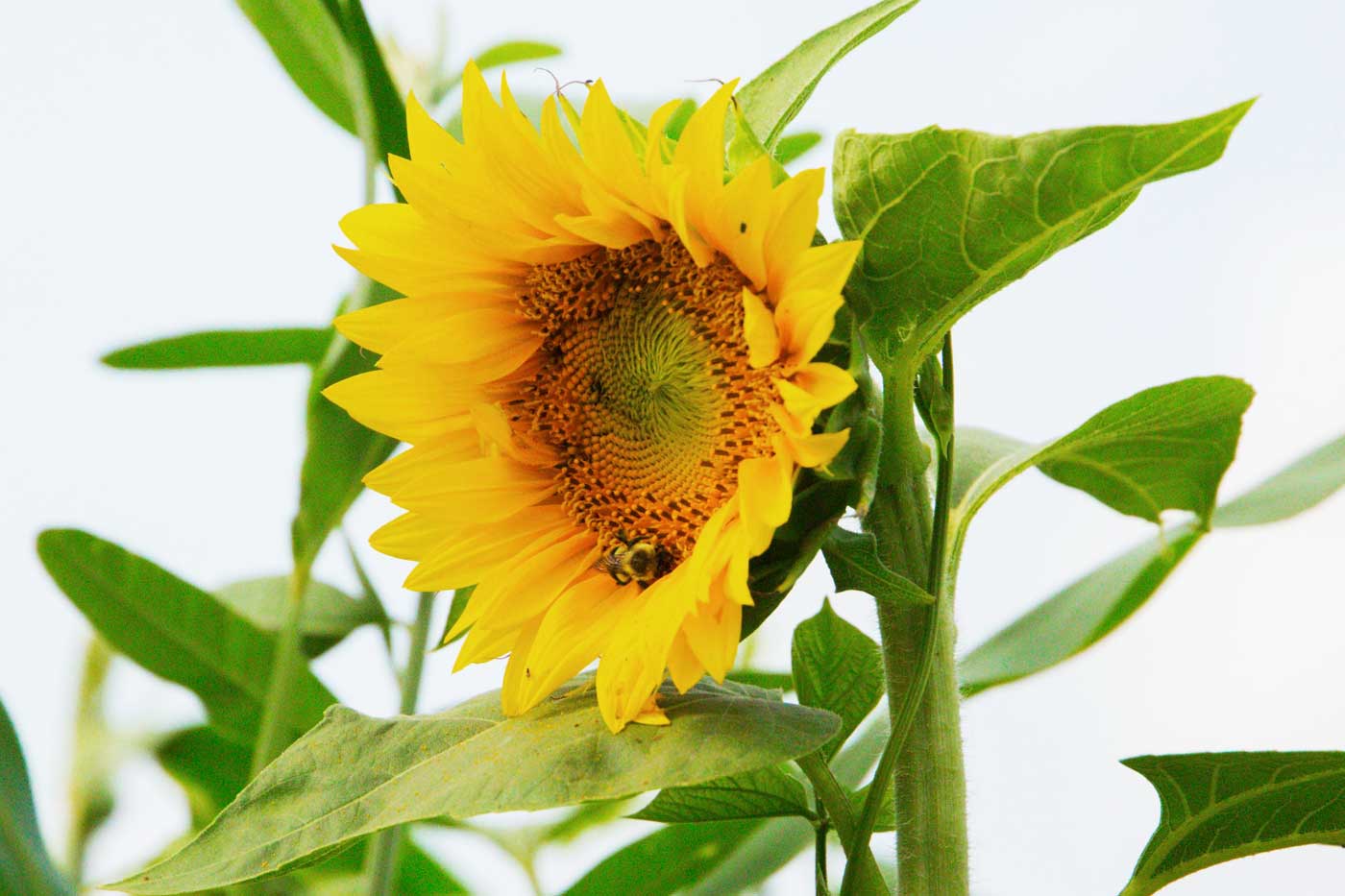
Synonymous with summer, sunflowers are almost as easy to grow as they are to love.
These aptly named icons are known for emulating the season’s sunshine. Young sunflowers follow the sun’s movement from sunrise to sunset while mature flowers face east, patiently awaiting the warmth of the morning sun. They can attract up to five times more pollinators than west-facing plants.
While known for their golden glow and bold brown centers, sunflowers come in many colors—with some varieties boasting vibrant red, orange, purple and pale white petals.
Depending on the type, they also can range in height and other characteristics—offering ample options for both urban and rural gardens, according to Virginia Cooperative Extension:
- Branching cultivars like Sonja, Soraya and Teddy Bear produce multiple blooms on the same plant over a long period.
- Pollenless cultivars like Buttercream and Double Quick Orange are ideal for cut flowers.
- Dwarf varieties like Teddy Bear and Sunspot are typically shorter than 3 feet, while dwarf varieties like Cappuccino and Chianti range from 3- to 8- feet tall.
- Giant cultivars like the Mammoth Russian can grow up to 12 feet tall.
Despite their intricate beauty, sunflowers are easy to grow from seed and typically bloom in 50-80 days, which means there’s still time to plant them for beautiful fall blooms.
According to The Old Farmer’s Almanac, sunflowers grow best in locations with direct sunlight for 6 to 8 hours per day and nutrient-rich, well-draining soil.
It’s best to sow sunflower seeds directly into the garden or outdoor containers. Pick a spot that’s sheltered from strong winds, as larger varieties may become top-heavy and topple over.
A light application of fertilizer during planting time will promote strong root growth to protect them from the elements. But feed plants sparingly, as overfertilization can cause stems to break in the fall.
While young, water about 3 to 4 inches from the plant and place snail or slug baits around the stem for protection. Once the plant is established, water deeply though infrequently.
Consider using bamboo stakes for any plant that has a strong, single stem and needs support for a short period of time.
For continuous blooms, try experimenting with plantings staggered over 5 to 6 weeks. And once the season’s over, you can harvest sunflower seeds for a tasty snack, replanting or feeding birds in the winter.
Visit The Old Farmer’s Almanac website for more information on planting, growing, arranging and caring for sunflowers and repurposing seeds.
While Virginia isn’t a primary sunflower-growing state, some farms are harvesting sunflowers for their seeds while others open their sunflower fields for picturesque photo backdrops, botanical mazes and cut-your-own experiences. Read more in Virginia Farm Bureau’s Summer Cultivate magazine.