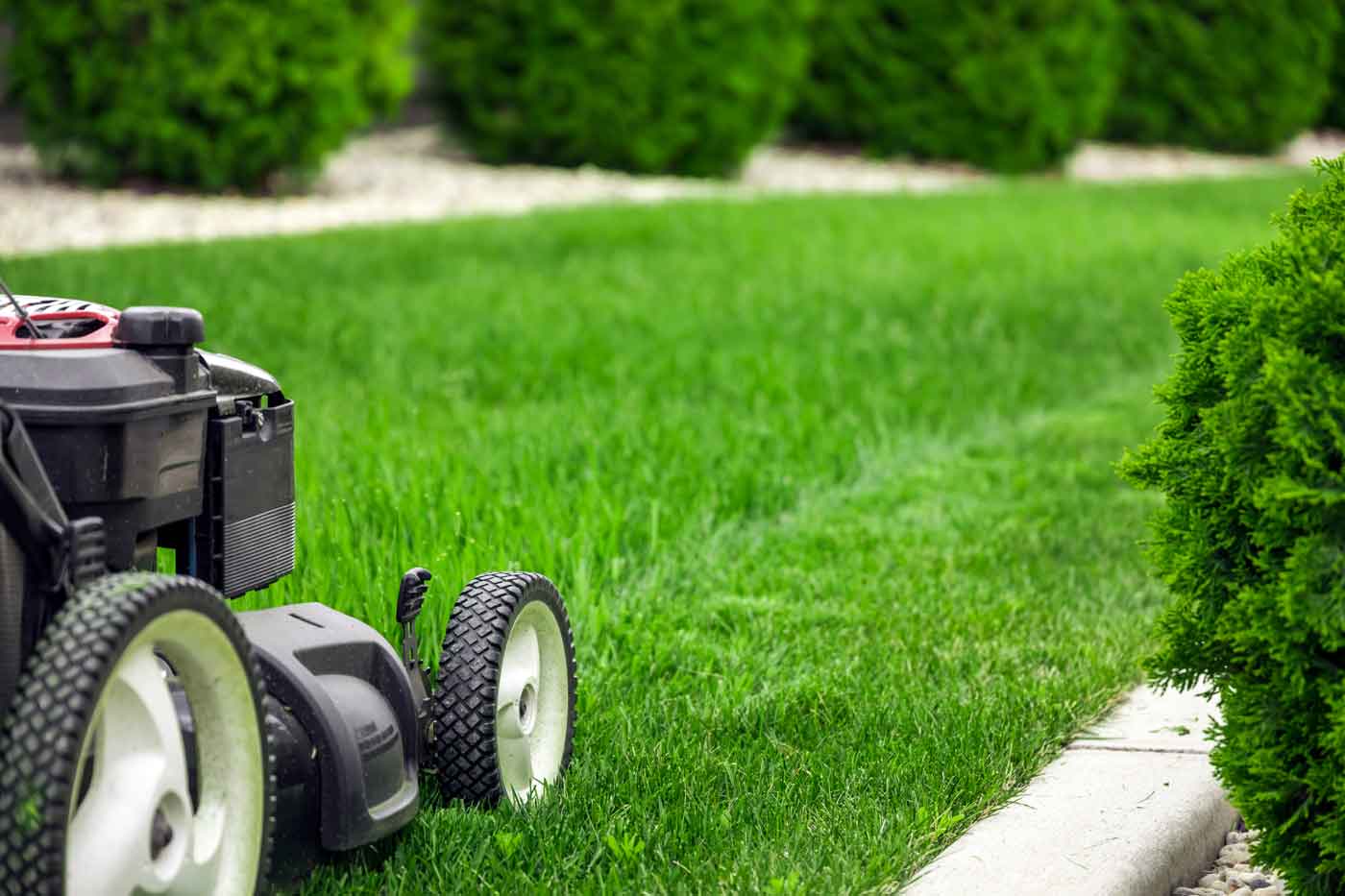
While keeping up with the lawn can feel like a springtime burden, working smarter can make all the difference.
When done right, mowing can enhance the health and appearance of your yard—boosting your home’s curbside appeal while reducing upkeep.
Homeowners can achieve a healthier lawn with fewer weeds by simply nourishing the soil. The Old Farmer’s Almanac recommends top-dressing the lawn with a ¼-inch-thick layer of manure-rich compost once a month during the growing season. This will make the soil more porous, drain better and prevent root rot.
The Almanac and Virginia Cooperative Extension offer key mowing tips for unlocking a greener yard:
- If using a weed eater, trim your lawn first so the mower chops up the trimmings. Do not use a trimmer near tree trunks. Establish a grass-free circle around trees.
- Mow the appropriate height of cut for your particular grass. Clip warm- and cool-season turfgrasses in the 2- to 3-inch range, although tolerable cutting heights may vary by species. For cool-season grasses, raise their cutting heights in the late spring or early summer to maximize tolerance to environmental and pest pressure. Warm-season grasses increase in density when mowed on the lower side of their recommended range in the summer. For shaded turf, mow on the high side of the recommended range to maximize the plant’s leaf area.
- To adjust the blade height, put your mower on a hard surface, measure the height of the blades with a tape measure, and adjust the deck height to the desired level.
- Follow the one-third rule: never remove more than one-third of the grass height, or you’ll starve the roots. If the turf has gotten away from you, slowly drop the mowing height every 2-3 days while returning the turf to its ideal cutting height range.
- Alternate mowing directions each time you mow to help keep grass growing upright and prevent soil compaction. Mow at a 45- or 90-degree angle to your last pattern.
- Do not mow when the grass is wet. If mowing in the morning, wait until the dew has dried.
- Keep the blades sharp to reduce tearing the grass, improve lawn fuel-use efficiency and extend engine life. Sharpen the blade at least three times per growing season—starting off the year with a sharp blade, sharpening it again in the late spring, and then once more in mid- to late-summer.
- Mow your lawn without a bag and leave the clippings to feed the lawn—returning needed nutrients to the soil.
- Rake up clumps. While it’s beneficial to leave lawn clippings, don’t leave any clumps that can smother a lawn.
- Spade the edging between the lawn and beds where needed; and re-mulch tree rings to protect them from mower nicks, which can invite disease and kill the tree.
Visit The Old Farmer’s Almanac website for more tips on lawn mowing and care, and the Virginia Cooperative Extension Publications page for additional guidance on mowing.
Click for crucial lawn mowing safety tips.
Read about simple ways to mow elegant lawn patterns in Virginia Farm Bureau’s Cultivate magazine.