As Virginia farmers prepare for corn, cotton, peanut and soybean harvests this fall, that means increased farm equipment on roadways.
Virginia motorists should prepare themselves for a busy harvest season sharing the state’s roadways with farmers moving equipment.
Through November, various activities will require growers to drive their machinery on public roadways. Because farming equipment is often slow-moving and can be wider than a single travel lane, farmers and other drivers are encouraged to use caution.
As summer comes to an end, commuter and school transportation will increase, meaning more use of backroads and increased traffic. Farmers need to be able to utilize these roads safely, which means everyone—including farmers—has to take the necessary precautions to ensure everybody reaches their destination safely.
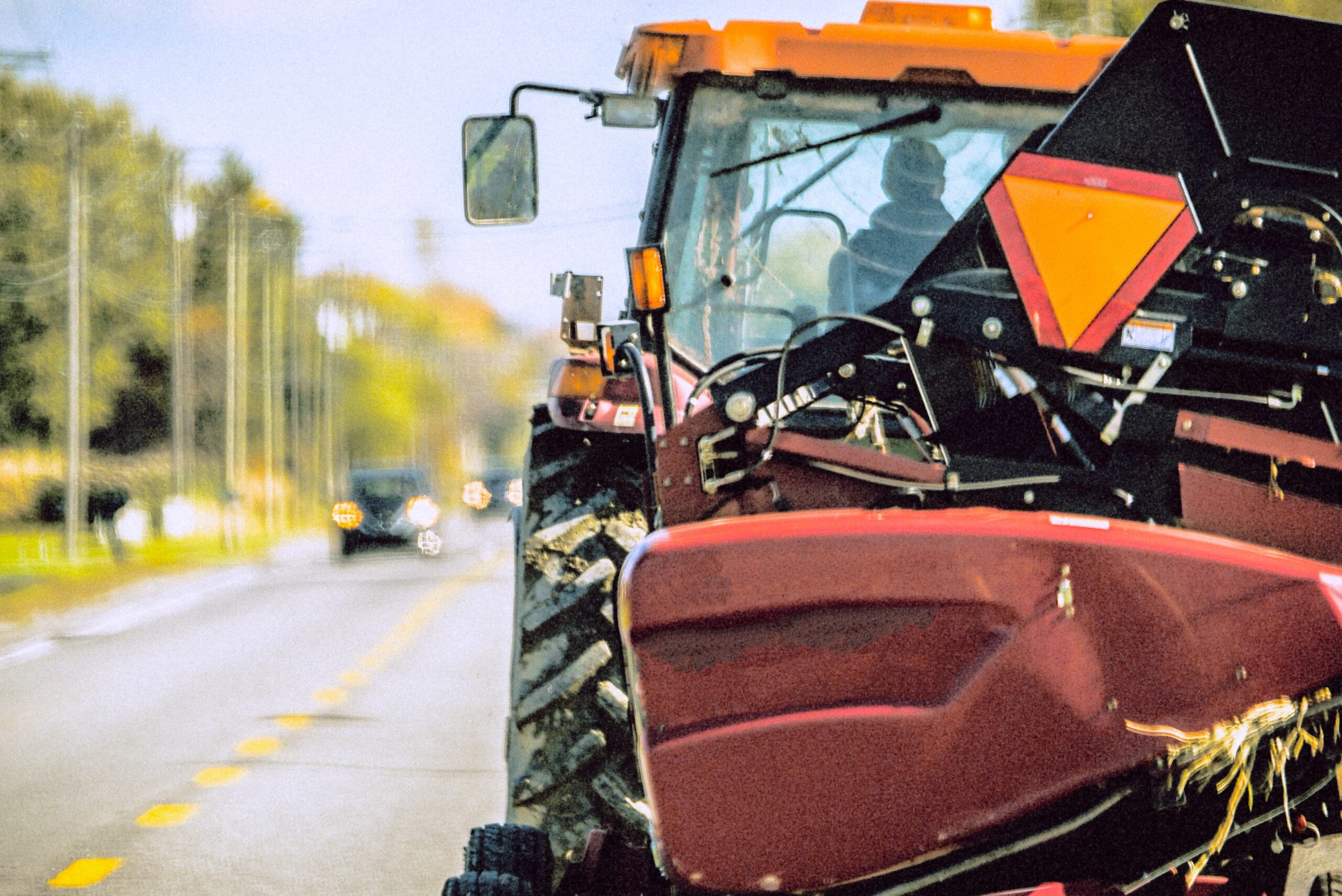
Virginia law requires vehicles that travel slower than 25 mph to be equipped with rear-mounted, triangular slow-moving vehicle signs when driven on public roads. The reflective orange signs act as a warning to approaching drivers to slow down, as passenger vehicles travel at speeds much faster than large farming equipment.
Farmers try to minimize their impact on traffic by moving their equipment when local roads aren’t busy, including midnight hours. Thus, state laws require farming equipment to have lights, which are required to be turned on from sunset to sunrise when traveling.
Growers also are encouraged to affix flashing amber lights and reflectors on farm vehicles to improve visibility.
Motorists are reminded to recognize these warning signs, and to give farmers time to move their equipment down the road or to pull off when it’s safe. Drivers also should pay attention when approaching blind corners and hills, pass only in designated zones and avoid risky behaviors when driving alongside farm machinery.
It takes a lot of effort and coordination for farmers to move their equipment from the farm and onto public roads. Farmers know the risks involved, and they want to get off the road as quickly as they can. Motorists are encouraged to give farmers the benefit of the doubt, be patient, and avoid driving in ways that could put them or the operator of that farming equipment in danger.