LEBANON—In Southwest Virginia, Sarah Wilson’s kids joke they’re always “doing something with hay,” she said.
“We’re fertilizing hay, we’re mowing hay, we’re raking hay, we’re baling hay, we’re storing hay,” Wilson continued. “Or we’re feeding hay.”
She needs all that hay to feed 300 mama cows and their 300 seasonal calves at Leonard Land and Livestock in Russell County. She operates the farm full time with her dad, David Leonard, 87.
Farming is a primary occupation for 8,810 women out of Virginia’s 25,000-plus female farmers, according to the 2022 Census of Agriculture. Many of them are full-time farmers and foresters whose track records set high standards within Virginia’s largest private industries.
The United Nations declared 2026 the International Year of the Woman Farmer, and Virginia Farm Bureau Federation will showcase women working in agriculture-related capacities throughout the year.
Wilson’s responsibilities vary by season.
“We’re trying to get all of our cows’ pregnancies checked, and we’re selling calves while getting heifers and steers shipped out before the end of the year,” she said in December.
Wilson had a corporate career but embraced the opportunity in 2010 to return full time to the family farm where she was “born and raised.
“It’s where I developed a passion for agriculture and where I really wanted to be,” she said.
It took time to reestablish herself in agricultural circles after returning as farm operator.
“Sometimes early on, a big decision had to be made, and people would want to call my dad or my husband, Adam,” Wilson chuckled. “But being persistent and showing up is a factor in establishing yourself.”
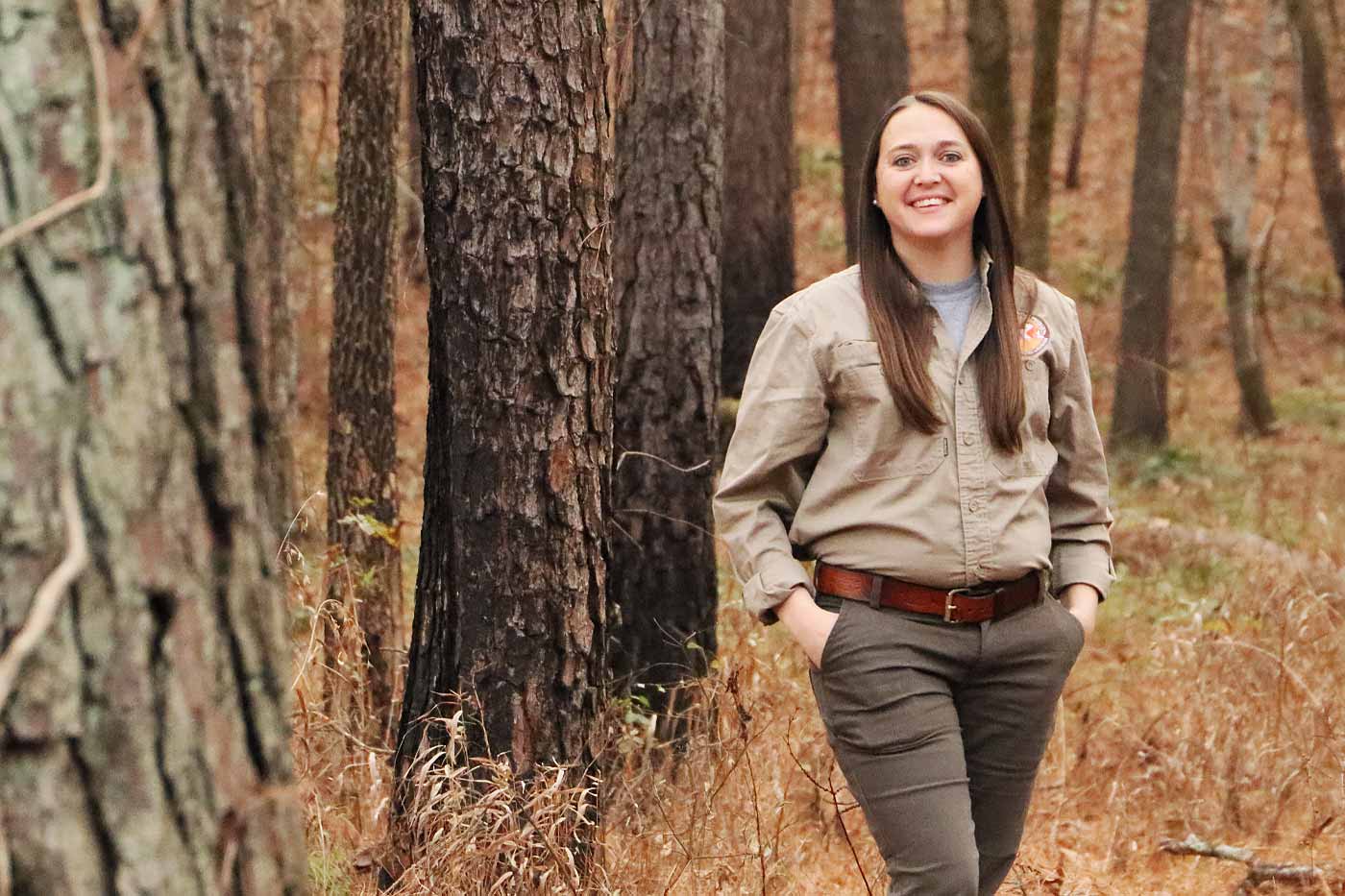
In Southside Virginia, Laura Hudson spent countless hours fishing and hunting as a youngster in Halifax County, teaching her respect for nature’s rhythms, an understanding of healthy ecosystems and a sense of responsibility for forest conservation.
A natural resources elective in high school led her to study fisheries and wildlife conservation at Virginia Tech, with a minor in forestry. After a stint in state forestry, she’s now working full time as Southern Piedmont regional supervisor for the Virginia Department of Conservation and Recreation’s Natural Heritage Program.
She oversees stewardship practices on forestland across 11 counties on natural areas of statewide significance that DCR acquired and manages through the Natural Area Preserve System. Its Natural Heritage Stewardship Section maintains and enhances the value of natural resources by conserving the area’s biological diversity. Practices include management planning, operations management and research.
“We’re also harvesting timber, controlling invasive species and overseeing prescribed burns,” Hudson said. “Trying to provide for good management on the ground.”
U.S. Bureau of Labor Statistics data suggests that among the nation’s forest and conservation workforce, women made up 14.5%.
Though men far outnumber women in forestry, “I felt I was always looked at as a peer,” she said.
Visit issuu.com/virginiafarmbureau for the full story in winter Cultivate magazine.
American Farm Bureau Federation has launched a national Women in Agriculture Study to understand the experiences, leadership pathways and needs of women in agriculture. The survey will gather insight from women working in production agriculture, agribusiness, education and advocacy through March 31. Visit bit.ly/WomenAgStudy to participate.
Media: Contact Wilson at 276-889-4252; or Hudson at 804-786-7951.